

Nobel da Física distingue trabalhos sobre o Cosmos
Os estudos no campo do Cosmos de James Peebles, por um lado, e de Michel Mayor e Didier Queloz, por outro, foram este ano os premiados do Nobel da Física.
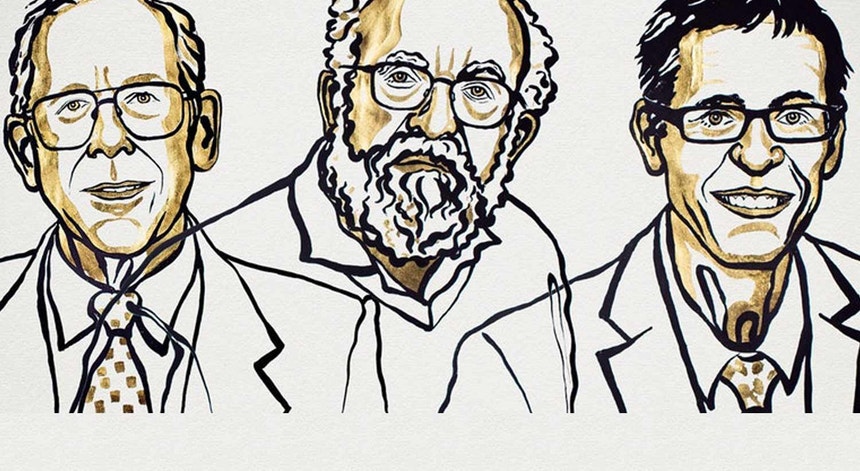
2019 #NobelPrize laureate James Peebles took on the cosmos, with its billions of galaxies and galaxy clusters. His theoretical framework, developed over two decades, is the foundation of our modern understanding of the universe’s history, from the Big Bang to the present day. pic.twitter.com/fly4alndv9
— The Nobel Prize (@NobelPrize) October 8, 2019
The discovery by 2019 #NobelPrize laureates Michel Mayor and Didier Queloz started a revolution in astronomy and over 4,000 exoplanets have since been found in the Milky Way. Strange new worlds are still being discovered, with an incredible wealth of sizes, forms and orbits. pic.twitter.com/nqhJcJGJTv
— The Nobel Prize (@NobelPrize) October 8, 2019
This year’s #NobelPrize in Physics rewards new understanding of the universe’s structure and history, and the first discovery of a planet orbiting a solar-type star outside our solar system. The discoveries have forever changed our conceptions of the world. pic.twitter.com/7RQmabi47z
— The Nobel Prize (@NobelPrize) October 8, 2019
James Peebles “interpretou os vestígios da infância do universo e descobriu novos processos físicos”, refere a Real Academia, acrescentando que o trabalho do laureado permitiu concluir que “apenas 5 por cento do Universo observável consiste em estrelas e planetas”.
“Os restantes 95% são misteriosos e compostos do que os físicos chamam energia escura e matéria escura”, indica, referindo que se teoriza que a “chamada energia escura mova a expansão do universo, enquanto a matéria escura é a substância invisível que parece rodear as galáxias, revelando-se apenas pelo seu efeito gravitacional”.
Em entrevista à Academia, Peebles afirmou que é preciso admitir que “a matéria escura e a energia escura são misteriosas, [com] muitas perguntas por responder”.
Questionado sobre a hipótese de vida em outros planetas, afirmou ter bastante certeza de que existe, mas admitiu ser muito difícil calcular se assume a mesma forma que na Terra.
Estes cientistas passam a integrar uma galeria de ilustres conhecidos onde estão, por exemplo, os nomes de Albert Einstein, Marie Curie, Niels Bohr ou Guglielmo Marconi.